

Retrofitting & Strengthening of Heritage / Historic Buildings in India
Preserving India's architectural legacy through science-led structural intervention — without compromising a single ornamental detail.
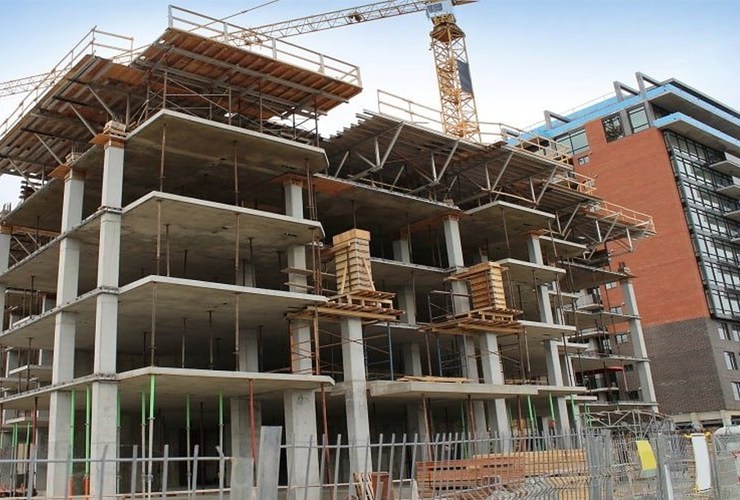
India's Historic Buildings Deserve to Stand for Another Century
India is home to one of the world's richest collections of historic and heritage architecture — from Mughal-era havelis and colonial-period government buildings to century-old residential estates and protected monuments. Many of these structures, however, were built using materials and techniques that no longer meet modern seismic, load, and safety standards.
At N Square Engineers, we specialise in the retrofitting and structural strengthening of heritage and historic buildings across India. Our engineering approach is rooted in one principle: safeguard lives and structural integrity while preserving every element of the building's original character — its ornamental facades, load-bearing masonry, arches, and period detailing.
We combine 15+ years of structural engineering expertise with heritage conservation best practices, working alongside architects, conservation specialists, and government bodies to deliver compliant, sensitivity-led retrofitting solutions.
Why Heritage Building Retrofitting Is Different
Historic structures present engineering challenges that standard construction projects simply do not. Each intervention must be designed with the precision of a surgeon — informed by deep knowledge of traditional construction methods, original materials, and the building's unique structural behaviour over time.
Aged & Incompatible Materials
Traditional lime mortar, brick, stone, or timber behaves very differently from modern concrete and steel. Introducing incompatible materials can accelerate deterioration rather than halt it.
Regulatory & Heritage Body Approvals
Projects involving ASI-listed monuments, INTACH-registered properties, or state heritage zones require specific regulatory clearances. Our team navigates this compliance landscape on your behalf.
Absence of Original Drawings
Most historic buildings have no surviving structural drawings. Our engineers conduct thorough non-destructive testing (NDT) and ground-penetrating surveys to map the structure before designing any intervention.
Preservation of Aesthetic Integrity
Plastered jharokhas, carved sandstone, decorative cornices, and fresco-painted interiors must be protected throughout construction. Our phased methodology ensures zero aesthetic compromise.
Occupied or Active Buildings
Guest houses, government offices, temples, and residential havelis are often still in active use. we specialise in phased, low-disruption retrofitting that keeps occupants safe and operations running.
Seismic Vulnerability
Much of northern and western India falls in Seismic Zones III–V. Unreinforced masonry buildings — the backbone of India's heritage stock — are highly vulnerable and require targeted seismic strengthening.
Comprehensive Heritage Building Retrofitting Services
N Square Engineers delivers end-to-end retrofitting and structural strengthening services for historic and heritage properties across India — from preliminary assessment to final restoration finishing.
Structural Condition Assessment & NDT
We begin with a comprehensive structural audit using non-destructive testing (NDT) tools including rebound hammers, ultrasonic pulse velocity (UPV) tests, carbonation tests, half-cell potential mapping, and ground-penetrating radar (GPR). This data informs every subsequent engineering decision.
Seismic Retrofitting of Masonry Structures
Unreinforced brick and stone masonry buildings are the most seismically vulnerable building type in India. We strengthen them through grout injection, stitching of cracks, horizontal steel ties, plinth band and roof band addition, and reinforced concrete jacketing where required.
Foundation Stabilisation & Underpinning
Settlement, subsidence, and shifting soils threaten foundations of historic structures. We employ micro-piling, jet grouting, and chemical consolidation to stabilise and strengthen foundations without disturbing superstructure above.
Carbon Fibre (CFRP) & GFRP Strengthening
Carbon Fibre Reinforced Polymer (CFRP) and Glass Fibre Reinforced Polymer (GFRP) wrapping systems are ideal for heritage buildings because they add minimal weight and volume while dramatically increasing structural capacity — with no visual impact on facades.
Slab Recasting & structural Slab Repair
Deteriorated RCC slabs, timber floor systems, and vaulted ceilings in old buildings are carefully assessed and either repaired using polymer-modified mortars or recast with appropriate engineering design — as executed in our Meghalaya Guest House project, New Delhi.
Facade Restoration & Surface Conservation
We match original lime plasters, sand-faced finishes, and stone claddings using traditional recipes augmented with modern consolidants. Carved elements, cornices, and decorative mouldings are repaired by skilled artisans trained in heritage craftsmanship.
Waterproofing & Damp-Proofing for Historic Structures
Water ingress is the primary cause of deterioration in historic buildings. We apply breathable, reversible waterproofing systems — including crystalline waterproofing, silane-siloxane treatments, and French drainage — that protect without trapping moisture inside traditional walls.
Structural Steel Insertion & Reinforcement
Where significant load uplift is required, we introduce concealed structural steel frames or plate girders integrated within the existing fabric — adding modern load-carrying capacity while remaining invisible to the observer from outside the building.
Proven Techniques for Historic Structure Strengthening
Grout Injection & Crack Stitching
Epoxy and cementitious grout injection fills internal voids and re-bonds delaminated masonry. Stainless steel helical bars are used to stitch wide cracks without damaging surface finishes.
Reinforced Concrete Jacketing
RCC jacketing around existing columns and walls increases load-carrying capacity and confinement, particularly effective for buildings in high seismic zones requiring lateral force resistance.
FRP Fibre Wrapping (CFRP/GFRP)
Thin, high-strength fibre composite sheets applied to structural members increase ductility and shear capacity with minimal added thickness — ideal where aesthetic preservation is paramount.
Micro-Piling & Foundation Underpinning
Small-diameter high-pressure grouted piles transfer loads to deeper competent strata, stabilising settled foundations in confined spaces where conventional piling equipment cannot operate.
Shear Wall Addition
New concealed or partially exposed shear walls absorb lateral earthquake forces, dramatically improving a building's seismic performance without altering the perceived spatial character of interiors.
Non-Destructive Testing (NDT)
UPV testing, rebound hammer surveys, GPR scans, and half-cell potential mapping give our engineers a complete picture of hidden deterioration — before a single brick is disturbed.
Our 6-Stage Heritage Retrofitting Process
Initial Consultation & Scoping
Understanding the building's history, current condition, occupancy status, regulatory listing, and the owner's objectives.
Structural Audit & NDT Survey
Detailed on-site testing, material sampling, photography, and 3D documentation to establish baseline structural health.
Engineering Design & Heritage Compliance
Preparing structural drawings, retrofitting specifications, and securing approvals from relevant heritage and municipal authorities.
Phased Construction Execution
Work is sequenced and phased to protect occupied zones, sensitive finishes, and critical structural elements at every stage.
Quality Assurance & Monitoring
Continuous QA checks, material testing, and structural monitoring throughout construction ensure compliance with design intent.
Restoration Finishing & Handover
Final facade restoration, surface conservation, documentation of works completed, and formal structural completion report.
Heritage Retrofitting in Action
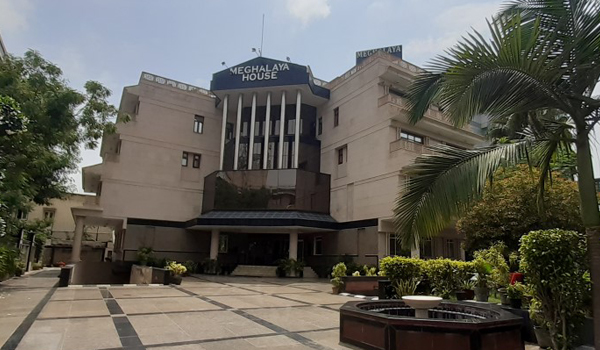
Meghalaya Guest House — Slab Recasting & Structural Strengthening, New Delhi
The Meghalaya Guest House, a prominent government property in New Delhi, presented significant structural deterioration including slab failure, reinforcement corrosion, and façade cracking. N Square Engineers was appointed as the principal structural contractor for comprehensive retrofitting and strengthening works.
Key Achievement: Structural integrity was fully restored while the guest house remained partially operational throughout, with zero damage to heritage facade features.
Who Needs Heritage Retrofitting Services?
N Square Engineers works with a wide range of clients across India who own, manage, or are responsible for the upkeep of historic and heritage-listed structures.
Central & State Government Bodies
Ministries, state guest houses, secretariat buildings, court complexes, and protected Government monuments requiring code-compliant structural upgrades.
Religious Trusts & Institutions
Temples, mosques, churches, gurudwaras, and dargahs with aging structures that serve large public gatherings and require seismic safety improvements.
Heritage Hotels & Haveli Owners
Private owners of palaces, havelis, and ancestral properties repurposed as boutique hotels or cultural venues seeking to meet hospitality safety standards.
Educational Institutions
Colleges, universities, and schools housed in colonial-era or pre-independence buildings requiring strengthening to protect students and staff from seismic hazard.
Healthcare Facilities
Historic hospitals and medical institutions — classified as essential post-earthquake structures — requiring the highest levels of seismic strengthening and structural reliability.
Private Heritage Home Owners
Families living in or maintaining ancestral bungalows, row houses, and pucca houses more than 50 years old that exhibit structural distress or are legally required to be structurally assessed.
India's Trusted Partner for Heritage Structure Strengthening
We bring the technical rigour of a structural engineering firm and the sensitivity of a conservation specialist — under one ISO-certified organisation.
Every solution is designed to preserve, not replace. We never apply a one-size-fits-all approach to historic fabric.
Our engineers hold M.Tech and B.Tech qualifications in structural engineering with specific heritage project experience.
We manage all heritage authority approvals, municipal NOCs, and ASI/INTACH coordination on the client's behalf.
Detailed BOQ-based pricing with no hidden costs. Regular financial reporting keeps you in full control throughout the project.
While headquartered in New Delhi, our teams are deployable to heritage project sites across India.
Structural retrofitting work is backed by a comprehensive warranty with ongoing inspection support available.
Frequently Asked Questions
What does retrofitting a heritage building actually involve?
Retrofitting a heritage building involves strengthening its existing structure — foundations, walls, columns, beams, slabs, and roof — to meet current safety codes without demolishing or replacing original materials. The process typically begins with a thorough structural assessment, followed by carefully selected intervention techniques such as crack stitching, CFRP strengthening, slab recasting, micro-piling, or seismic band addition, all executed with minimal impact on the building's historic character.
Will retrofitting work damage the original facade or decorative features of the building?
No — when executed correctly by experienced heritage engineers, retrofitting should leave original facades, ornamental details, carvings, and period features entirely intact. N Square Engineers uses reversible, non-invasive techniques wherever possible and works with skilled conservation artisans to repair any surfaces that must be accessed during structural intervention. Our Meghalaya Guest House project in New Delhi is a testament to this approach.
Do we need approvals from ASI or INTACH before starting retrofitting work?
If the building is a centrally or state-protected monument, work requires prior clearance from the Archaeological Survey of India (ASI) or the relevant State Department of Archaeology. For INTACH-listed properties or buildings in heritage zones, local municipal heritage committees must be consulted. N Square Engineers has experience managing all necessary regulatory approvals and can guide you through this process efficiently.
How long does a heritage building retrofitting project take?
Project duration depends on the building's size, the extent of structural deterioration, the complexity of heritage approvals required, and whether the building remains occupied during works. A modest residential heritage property may take 3–5 months, while a large government building or multi-wing complex could require 12–24 months. We provide a detailed project programme at the outset of every engagement.
Can N Square Engineers undertake heritage retrofitting projects outside Delhi NCR?
Yes. While our base of operations is in New Delhi, we have the team, equipment, and project management infrastructure to undertake heritage and historic building retrofitting projects across India — including Rajasthan, Uttar Pradesh, Uttarakhand, Maharashtra, and other states with significant heritage building stock.
What is the cost of retrofitting a heritage building?
Costs vary significantly based on structural condition, area, materials required, regulatory complexity, and chosen intervention techniques. We provide a detailed, itemised BOQ (Bill of Quantities) after conducting a site assessment, ensuring full pricing transparency. Contact us for a free initial consultation and indicative cost assessment.